Twice Exceptional Students in Dubai: What 2e Really Looks Like
Twice exceptional (2e) students are children who are intellectually gifted and, at the same time, have a learning difference, neurodevelopmental condition, or disability that significantly affects how they function academically. In Dubai's international schools, this profile is one of the most commonly missed, because the giftedness and the difficulty mask each other.
There is a particular kind of parenting exhaustion that comes with raising a child who is clearly, obviously, sometimes breathtakingly bright — and who is simultaneously falling apart over a homework deadline, a group project, or the simple task of writing down what is due next week.
You have probably heard the phrase "not working to potential." You have probably heard it from teachers who mean it kindly but have no idea what to do about it. You may have started to wonder whether the potential was ever really there, or whether you imagined it.
You did not imagine it. And "not working to potential" is one of the most inadequate phrases in education for what is actually happening.
What is actually happening, in many cases, is twice exceptionality.
If you already recognise this in your own child, the practical starting point is executive function coaching for teenagers in Dubai — but read on first, because understanding the profile is what makes any support work.
What 2e (Twice Exceptional) Actually Means
Twice exceptional — often shortened to 2e — refers to students who are both intellectually gifted and have a learning difference, neurodevelopmental condition, or disability that significantly affects how they function academically. The "twice" refers to their dual status: exceptional in abilities, and exceptional in challenges.
The most common combinations in the international school population include:
- Gifted with ADHD
- Gifted with dyslexia
- Gifted with autism spectrum disorder
- Gifted with anxiety or emotional dysregulation
- Gifted with processing speed difficulties
What makes 2e students genuinely difficult to identify — and genuinely difficult to support — is that their gifts and their challenges mask each other. The gifted side compensates for the difficulties, often for years, until the academic demands increase past the point where intelligence alone can carry them. And the difficulties suppress the full expression of the gifts, meaning schools often see a student who is inconsistent, underperforming, or "lazy" — when they are, in fact, a student with significant ability and significant need operating in a system designed for neither.
If the word "lazy" has been used about your child, it is worth reading why "lazy" is almost always the wrong explanation.
Why Dubai's International Schools Make This Harder
The twice exceptional profile is challenging to identify and support in any school system. In Dubai's international school environment, there are several additional layers that make it harder.
The high floor of expectation. Dubai's international schools — particularly those offering the IB Diploma, IGCSE, and A Level — operate with very high academic baselines. A 2e student who is genuinely gifted may be producing work that is good enough to avoid flagging concern, even while they are working twice as hard as their peers to produce it, or are on the edge of a breakdown behind the scenes. The school sees adequate performance. The family sees the cost of producing it.
The compensation window closes late. Many 2e students in Dubai's school communities have been compensating successfully for years — sometimes through sheer intelligence, sometimes through parental scaffolding, sometimes through highly structured primary school environments. The point at which compensation fails is often around Year 9 or 10 for IGCSE, or the entry into IB Diploma in Year 12. This is not when the difficulty began. It is when the difficulty became visible.
The diagnostic gap. A formal 2e assessment in Dubai requires a licensed psychologist through an approved DHA-registered clinic. Many families either do not know this, cannot access it quickly, or receive assessments that identify the difficulty without adequately capturing the giftedness — producing a partial picture that leads to partial support.
The labelling tension. In some cultural communities represented in Dubai's international school population, having a child formally identified with any kind of learning difference carries significant stigma. Families may resist assessment, prefer informal support, or frame the difficulties as a phase rather than a profile. This is understandable. It also means the student goes unrecognised for longer.
Families across Dubai Hills Estate, Jumeirah, Arabian Ranches, Dubai Marina and Downtown Dubai describe the same sequence: a bright child, a strong primary school report, and then a gradual unravelling once the workload becomes self-managed.
What 2e Looks Like in Practice
The twice exceptional profile does not look the same in every student. But there are patterns that appear consistently in the students we work with at Executive Skills Dubai.
Uneven academic performance. A 2e student may be exceptional in certain subjects and genuinely struggling in others — not because they lack intelligence in those areas, but because the specific demands of those subjects (extended writing, sustained organisation, sequential processing) interact badly with their difficulty profile. A student who produces extraordinary verbal analysis in English Literature and cannot organise a science write-up is not inconsistent. They are twice exceptional.
Intense interests and complete disengagement. The hyperfocus that characterises many ADHD-gifted students is not laziness in reverse. It is a neurological reality. When a subject or a problem captures a 2e student's interest, they can produce work of remarkable depth and originality. When it does not, they may be genuinely unable to engage at the level the task requires. This can look, from the outside, like selective effort or deliberate underperformance. It is usually neither. We cover the mechanism in detail in ADHD hyperfocus: why boring tasks feel impossible.
High verbal intelligence, poor written output. This is one of the most consistent and frustrating patterns in the 2e profile. The student who can discuss, debate, and analyse at a sophisticated level, but whose written work does not reflect that ability, is often a 2e student whose processing speed, working memory, or fine motor difficulties create a bottleneck between what they think and what they can produce on the page or screen. In an examination system that predominantly assesses written performance, this is a structural disadvantage.
Emotional intensity. Twice exceptional students are frequently more emotionally and intellectually sensitive than their peers. The combination of high intelligence, awareness of their own inconsistency, and the gap between their internal sense of their own ability and their external academic output frequently produces significant frustration, anxiety, and in many cases, what looks like defiance or refusal. It is usually distress. See why high-achieving teens fall apart over small setbacks.
Exhaustion. Sustained compensation is exhausting. A 2e student who has been masking difficulties through effort and intelligence for years is often, by the time they reach Year 10 or 12, running on very little reserve. The exhaustion is real and it is not the same as laziness. It is the result of working significantly harder than their peers to produce equivalent outcomes. In girls especially, this often shows up as holding it together at school and falling apart at home.
If you are reading these patterns and recognising your own family, a conversation is more useful than another article. Book a free consultation and we will help you work out what is actually going on, or see how the coaching programme is structured first.
The Identification Problem
Giftedness can mask learning difficulties, while learning difficulties can hide intellectual gifts. The result is that many 2e children go unrecognised for both their abilities and their challenges.
In practice, this means Dubai's 2e students tend to get identified in one of three incomplete ways:
Identified for the difficulty, not the giftedness. The student is assessed and identified with ADHD, dyslexia, or ASD. Support is put in place for the difficulty. The giftedness is noted but not specifically addressed. The student receives accommodations but not challenge, and continues to be bored, disengaged, and underperforming in the areas where they have the most capacity.
Identified for the giftedness, not the difficulty. The student is placed in extension programmes or advanced streams based on their demonstrated ability in certain areas. The difficulty is attributed to attitude, effort, or emotional maturity. No formal assessment occurs. The student is held to a standard that their difficulty profile makes consistently unachievable, and the gap between expectation and output becomes a source of chronic shame.
Not identified at all. The student's gifts and difficulties are roughly equal in their effect on academic output, producing performance that looks average or slightly below average. Neither teachers nor parents push for assessment. The student moves through school producing work significantly below their actual ceiling, without anyone fully understanding why.
What 2e Students Need That They Are Rarely Getting
The research on twice exceptional learners is consistent on one point: a failure to understand these students can have lasting effects. Adults who do not understand the 2e profile often reach for shaming language — lazy, careless, not trying — and those messages land hard on a child who is already working harder than anyone can see.
What 2e students actually need is a specific combination of support that is rarely available within the standard provision of Dubai's international schools:
Strengths-first entry. Most educational support for students with learning differences begins with deficits. What does the student struggle with? What does the student need? For 2e students, this approach suppresses the very gifts that could make the rest possible. Support that begins with "what does this student do remarkably well?" and builds from there produces fundamentally different engagement and outcomes.
Explicit executive function skill-building. The executive function difficulties that affect 2e students — task initiation, organisation, working memory management, emotional regulation — do not resolve with content tutoring or academic support. They respond to direct, structured skill-building. Many 2e students have significant insight into their own difficulties but no effective strategies for managing them. The gap between knowing and doing is, for them, neurological rather than motivational. If you are weighing options, read executive function coaching vs tutoring.
Environment design. Many 2e students perform significantly better in environments that are structured, predictable, and low in competing demands. This is not about special treatment. It is about reducing the cognitive load of the environment so that the student's actual cognitive capacity can go to the work rather than to managing the environment.
Identity support. One of the most consistent findings in the 2e literature is that these students frequently develop a fragmented or negative academic identity — they know they are capable, they know they are struggling, and they cannot reconcile the two. Coaching that explicitly works on how a student understands themselves as a learner can be as important as any strategy or system.
Challenge alongside support. This is the element most commonly missing in Dubai's schools for 2e students. Support addresses the difficulty. Challenge is withdrawn because the student is "struggling." What 2e students need is both simultaneously — support for what is hard, and genuine intellectual challenge in the areas where they have real capacity. Removing challenge in the name of reducing pressure is one of the most reliably counterproductive things a school can do for a 2e student.
The Executive Function Layer
Executive function difficulties are present in virtually every 2e profile, regardless of the specific co-occurring condition. This is because the same neurological systems that govern executive function — prefrontal cortex maturation, dopamine regulation, working memory capacity — are implicated across ADHD, ASD, dyslexia, and anxiety.
For a 2e student in an IB or IGCSE programme, the executive function demands are significant:
- Managing multiple simultaneous coursework deadlines
- Initiating work on tasks that do not capture intrinsic interest
- Organising complex, multi-step projects across weeks or months
- Sustaining effort on tasks that feel repetitive or low-relevance
- Regulating the emotional response to setbacks, criticism, or perceived failure
- Monitoring their own progress and self-correcting without adult prompting
These are all executive function demands. And for a student whose difficulty sits in the executive function layer, these demands are not just academically challenging — they are neurologically costly in a way that other students in the same class are not experiencing.
This is why content tutoring rarely resolves the 2e performance problem. A tutor can fill the knowledge gap. They cannot build the executive function infrastructure. Those are different interventions. For the curriculum-specific picture, see IB and IGCSE student support in Dubai.
What Works: An Evidence-Based Picture
The research on 2e intervention is clearer than it might appear. A twice exceptional student thrives when their school addresses their difficulties and also ensures they are genuinely intellectually challenged. Beyond that broad principle, the evidence points to several specific approaches:
Structured, explicit strategy instruction. Dawson and Guare's work on executive skill-building demonstrates that EF skills are teachable — not through indirect support or environmental management alone, but through direct, structured practice of discrete skills. For 2e students, this means a coach who is building specific skills explicitly: how to start, how to plan backwards, how to manage the emotional cost of difficult tasks.
Identity-based framing. Clear's work on identity-based habit formation is particularly relevant for 2e students, whose academic identity is frequently damaged by years of inconsistency. Coaching that builds a new self-concept — "I am someone who manages my work systematically" — produces more durable change than strategy instruction alone, because it changes the internal narrative that governs whether strategies get used.
External system design. Barkley's research on ADHD and executive function demonstrates that external systems are not a crutch but a neurological necessity for students with dysregulated working memory and attention. For 2e students, building the minimum viable external system — for materials, for time, for task sequencing — reduces the cognitive load sufficiently to allow their genuine capacity to be expressed. Practical organisation systems for teenagers is a useful starting point.
Parent coaching alongside student coaching. The research on 2e consistently finds that parental understanding of the profile is one of the strongest predictors of outcome. Parents who understand why their 2e child is inconsistent — and who respond to inconsistency with curiosity rather than pressure — produce significantly better outcomes than parents who apply the same expectations of consistent performance they would apply to a neurotypical student.
What to Do If You Think Your Child Is 2e
If you are reading this and recognising your child, the following steps are worth considering:
Seek a comprehensive assessment. In Dubai, a full psychoeducational assessment from a DHA-licensed clinical psychologist will assess both intellectual ability and any co-occurring learning differences. The assessment should cover IQ across multiple domains (verbal, visual-spatial, fluid reasoning, working memory, processing speed), specific learning skill testing, and an executive function battery. A one-dimensional assessment that identifies the difficulty without capturing the ability profile is not sufficient.
Understand the school's provision. Dubai's schools vary enormously in their capacity to support 2e students. Some have experienced SENCOs who understand the dual exceptionality profile and can build provision around both strengths and difficulties. Others are better equipped to support either gifted students or students with learning differences, but not both simultaneously. Knowing which you are dealing with matters.
Consider executive function coaching separately from academic support. Tutoring and school-based SENCO support address academic content and in-school provision. Executive function coaching addresses the self-management layer — the skills that determine whether your child can apply what they know, consistently, without relying on adult scaffolding. For many 2e students, it is the missing piece.
Protect the identity. The 2e label, if it lands without care, can compound the shame a student already carries. The most useful framing for a 2e student is not "you have a difficulty and a gift." It is: "your brain works in a specific way that produces specific strengths and specific challenges, and we are going to build the systems and skills that let you access your actual ability." That is a very different story, and it produces a very different student.
ESD and Twice Exceptional Students
Executive Skills Dubai works regularly with 2e students across Dubai's international schools. The profile — gifted but inconsistent, capable but exhausted, insightful about their own difficulties but unable to resolve them — is one we know well. For 2e students, the comments on a school report often tell the story.
Our approach for 2e students follows the same evidence-based framework we use for all ESD coaching: diagnostic-first, strengths-anchored, and explicitly designed to build independence rather than dependency. Where 2e students are different is in the emphasis we place on the identity work — helping them reconcile what they know they can do with what they have been told their performance suggests, and building a self-concept as a learner that is accurate, specific, and genuinely their own.
You can read case studies of students we have worked with or see what parents say.
If your child is twice exceptional, or you suspect they might be, a free consultation call is the right first step. We will ask the right questions, listen carefully, and tell you honestly whether ESD coaching is the right fit — or see how the programme works first.
FAQ
What is twice exceptional (2e)?
Twice exceptional refers to students who are both intellectually gifted and have a learning difference, neurodevelopmental condition, or disability that significantly affects their academic functioning. Common combinations include gifted with ADHD, gifted with dyslexia, and gifted with autism spectrum disorder. The term captures the dual nature of these students' profiles — exceptional in ability, and exceptional in challenge.
How do I know if my child is twice exceptional?
The most reliable route is a comprehensive psychoeducational assessment from a DHA-licensed clinical psychologist in Dubai. Indicators that may suggest a 2e profile include consistently uneven academic performance across subjects, high verbal or analytical ability alongside significant difficulty with organisation, output, or sustained effort, emotional intensity, and a visible gap between what your child can discuss and what they can produce in writing.
Do Dubai international schools support twice exceptional students?
Provision varies significantly. Some schools have experienced SENCOs who understand the 2e profile and can build support around both strengths and difficulties. Others are better equipped for either gifted support or SEND support separately. Families should ask schools directly about their experience with 2e students and what provision looks like in practice, rather than relying on general inclusion statements.
Does a 2e student need a diagnosis before getting coaching support?
No. Executive function coaching does not require a formal diagnosis. ESD works from a student's EF profile, which is assessed during the first two sessions regardless of any prior diagnostic history. That said, a formal assessment is strongly recommended to give families and schools a complete picture of the student's profile.
Is executive function coaching suitable for 2e students?
Yes. EF coaching is particularly well-suited to 2e students because it addresses the layer where their difficulty most consistently sits — not academic content, but the self-management skills that govern whether they can apply what they know. 2e students are often highly capable of engaging with and implementing EF strategies once they have a coach who understands their profile and works from strengths rather than deficits.
How is ESD coaching different from seeing a SENCO at school?
A school SENCO manages in-school provision, accommodations, and coordination with teachers. ESD coaching builds the student's own internal skills outside the school environment. The two are complementary. Many of our 2e students receive both school SENCO support and ESD coaching simultaneously, and the combination produces better outcomes than either alone.
Can 2e students succeed in the IB Diploma?
Yes, and many do, once they have the right support in place. The IB Diploma makes significant executive function demands, which can be particularly challenging for 2e students. Early coaching support, ideally in Year 11 before the Diploma begins, is significantly more effective than crisis intervention in Year 12. The earlier the support, the better the outcome.
Executive Skills Dubai provides 1-to-1 executive function coaching for students aged 11 to 18 across Dubai's international schools, including students with 2e profiles, ADHD, and other learning differences. Book a free consultation to discuss your child's specific situation.
Related reading: when your teenager stops wanting to go to school.
If this sounds familiar, our guide to ADHD coaching explained for parents covers the next step.
If this sounds familiar, our guide to why criticism lands so hard covers the next step.
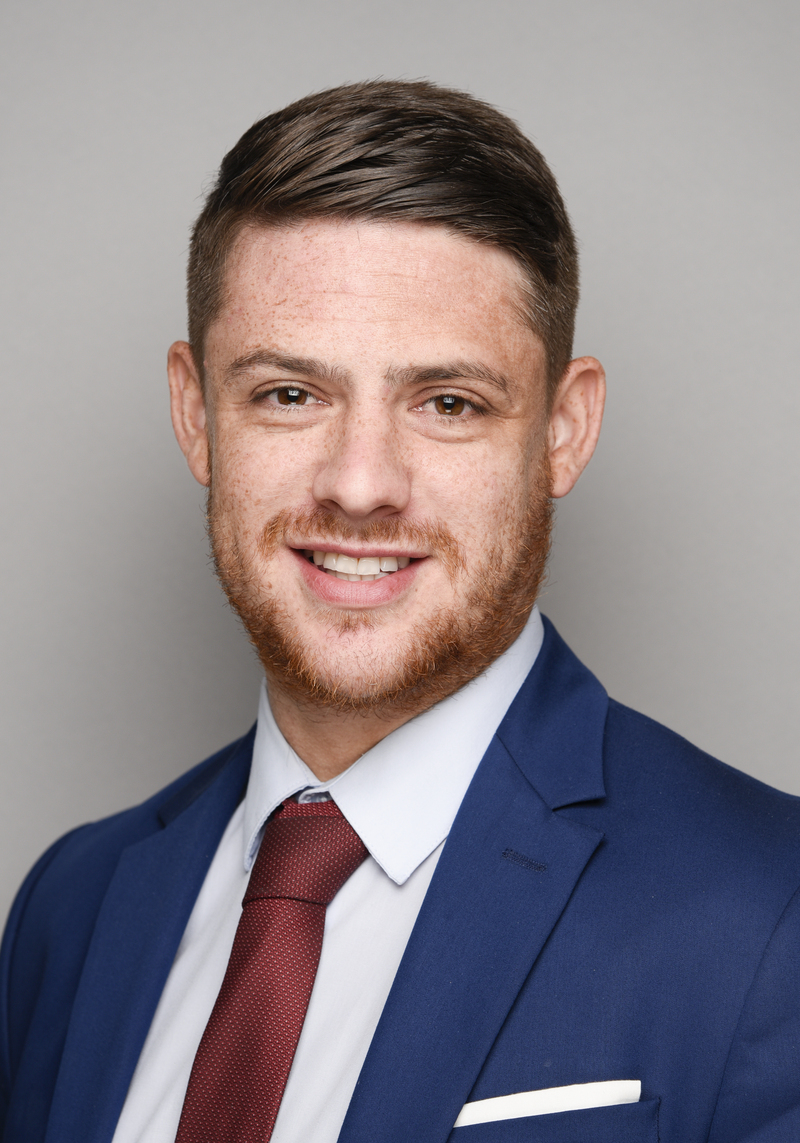
About the Author
Lewis Griffiths
Executive Functioning Coach & Founder
Lewis Griffiths is an Assistant Principal with 12 years in education, seven of them in Dubai's international schools. He holds a PGDE in Secondary Education and a Master's in Education Practice, and founded Executive Skills Dubai to coach students aged 11–18 in the executive function skills schools assume they already have.